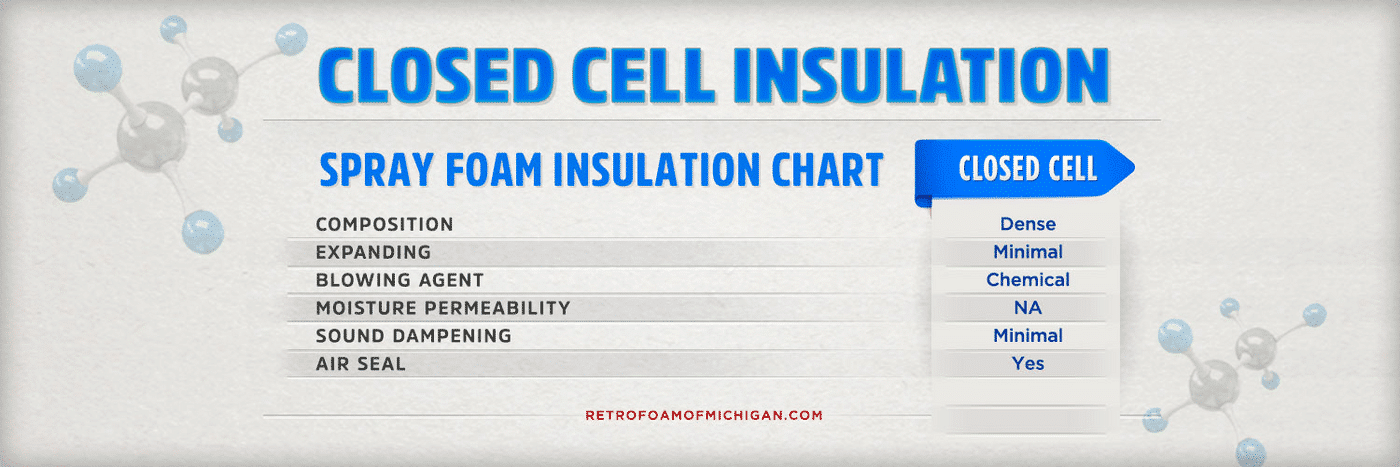
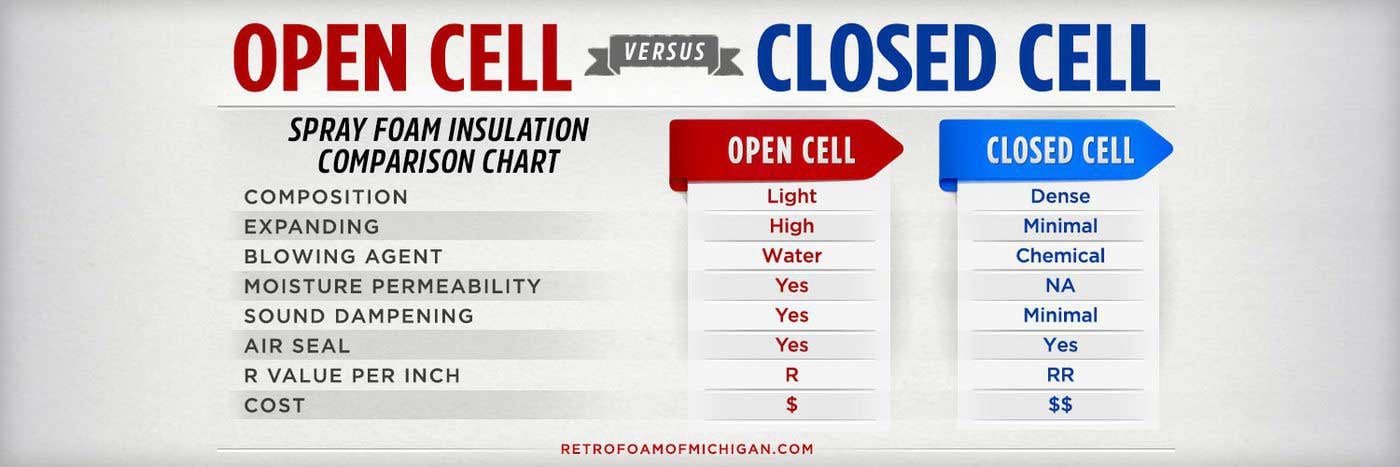
Compared to traditional insulation whether fiberglass or cellulose spray foam has the potential to provide better performance via its air sealing properties high r values per inch of thickness and in the case of closed cell spray foam ability to repel moisture.
Open cell insulation problems.
It rots roofs people have told me.
Many homeowners love spray foam insulation and it s easy to understand why.
Both icynene open cell and closed cell spray insulation are effective insulators with both working as barriers for air leakage.
The evaluation service report esr for spray foam insulation products provides a valuable resource based on a third party review of testing information useful for utilizing these.
Not long ago someone even told me that in florida roofing companies won t let their workers go up on roofs with open cell spray foam because the roofs are so spongy the guys fall right through.
For example icynene open cell spray foam must be installed at 3 inches before an air barrier is created.
Murmurs and hearsay about open cell spray foam insulation have been gaining traction for a while.
Maines identifies its advantages a high r value per inch a capacity for air sealing and for blocking water vapor movement and its enhancement of the framing to sheathing connection.
However open cell and closed cell have their different uses.
Closed cell products are better than open cell ones for this advantage but both provide better options than organic insulation products.
It s just a pathway.
It s the wood decking that stores the moisture though.
Open cell spray foam may absorb moisture if subjected to hydrostatic pressure but will allow moisture to drain through open cell spray foam will not wick water or contribute to capillary action when applied to the interior cavity open cell can also be supplemented with closed cell spray foam to create a continuous insulation layer on the exterior.
Oh and when you put it in your attic spray foam.
It has a relatively high vapor permeance 3 perms at a thickness of 6 allowing water vapor to migrate to the roof decking at night and back into the attic air in the daytime.
The spray foam insulation chemicals weren t mixed properly.
Contributing editor michael maines takes a detailed look at closed cell spray foam which is growing in popularity as an insulation material.
The role of open cell spray foam.
Open cell spray foam insulation doesn t store the moisture.
Both low density open cell and medium density closed cell spray foam can be used in an unvented attic to provide the needed thermal resistance and airtightness.